
Update: I have a longer piece on this topic: AI stigma punishes legitimate use.
A lot has been said recently about watermarking plain text, which allow AI labs to act as AI detectors. And there are already non-watermark ways of detecting AI output (e.g. Pangram). I think all of these are a bad idea.
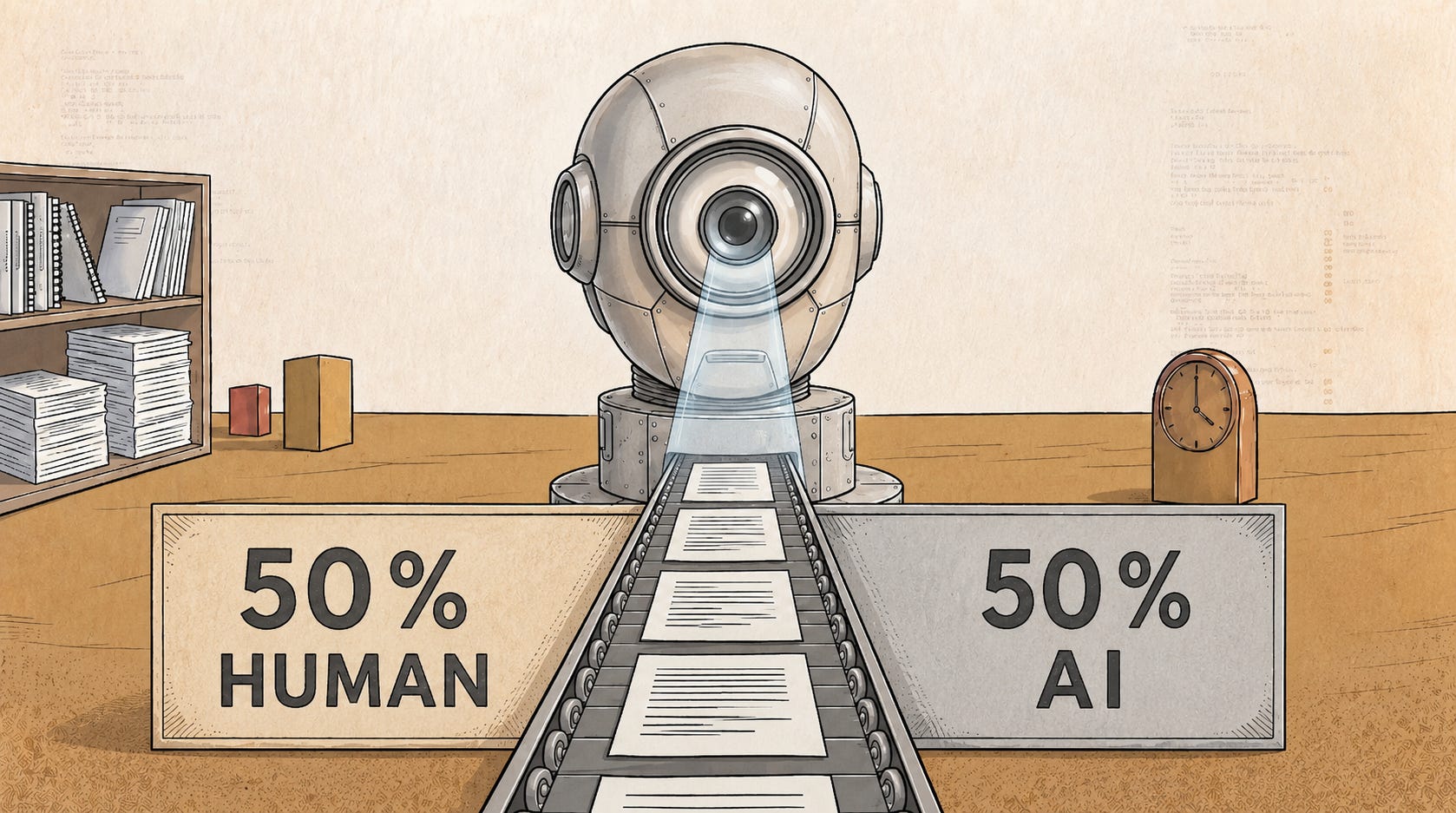
The big issue is that none of these systems know how much effort went into a work before it passed through an AI model. Yet their results are seized on to dismiss people’s work as AI slop.
Lazy work and writing existed long before AI. But now the work of someone who spends days, weeks, or months thinking about a problem and forming an argument around it, can be waved away and dismissed as AI slop because the final polished version was written up by AI. Or consider someone whose first language isn’t English, who uses AI to have their written work translated. Dismissed as slop too, thanks to these detectors.
Whether a piece of text came out of an AI model or not tells us nothing about the work behind it. And companies like Pangram aren't incentivised to make this case loudly, because it would mean less demand for their detector.
AI watermarking, however, is even worse. The labs don’t admit to it in plain language, but its essential mechanism is downgrading the words a model would naturally write and replacing them with less likely, i.e. worse, alternatives. The lab can then later use its secret key to see if a piece of text was generated with its model. John Gruber calls this an adulteration and perversion of writing in his recent piece.
If you’re curious how these work, I put together a simplified interactive explainer you can try. A short video of it below.